100 posts
Archive
A chronological view of all content within AI-360.

A chronological view of all content within AI-360.

Anthropic embeds governance, approvals, and existing software permissions into new SME AI workflows.

SAP and NVIDIA expand their partnership to add runtime security, policy enforcement, and governance controls for enterprise AI agents.

Johnson brings two decades of knowledge from Goldman Sachs, board chops from Pfizer, Intuit, The Brookings Institution.

Partnership unveil DSX AI factories designed to accelerate grid connection and enable flexible, energy-responsive data centers

Hybrid AI infrastructure tools with AWS and SAP integrations enable controlled, scalable enterprise AI deployment, says IBM.

Hyperscale AI infrastructure growth puts pressure on the ability to match electricity use with renewables by 2030.

The ruling lowers barriers to patent protection, potentially opening doors to funding for UK SMEs.

xAI introduces a voice AI model built for complex customer workflows, with real-time reasoning and enterprise tool integration.

New AI integrator backed by major asset managers will deliver custom Claude implementations for mid-market firms lacking in-house AI capacity.
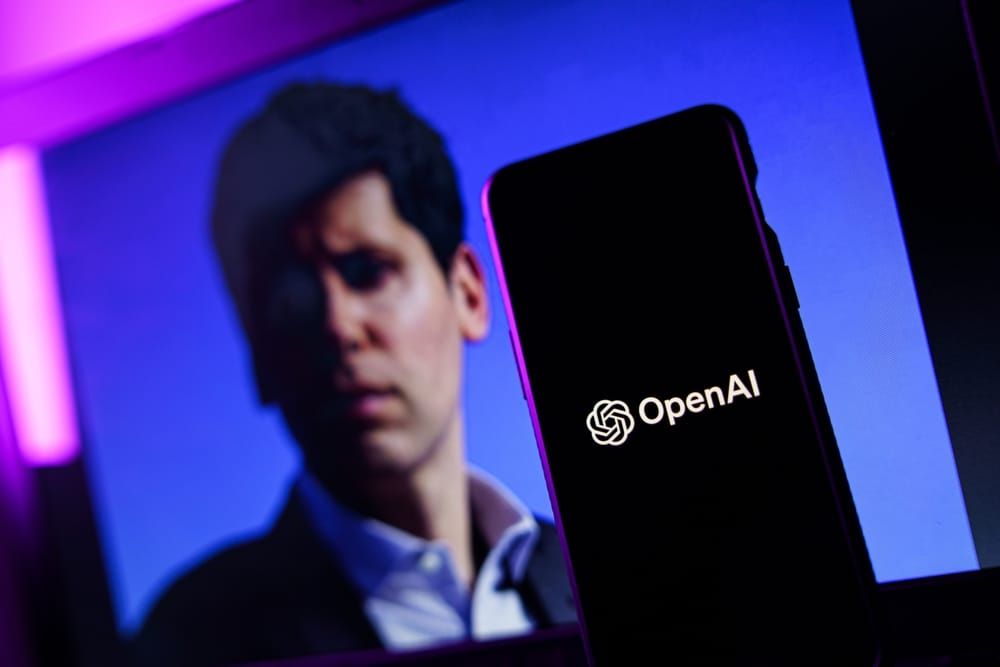
As Elon Musk testifies in Oakland, the lawsuit over OpenAI’s for-profit conversion establishes a high-stakes benchmark for AI governance and fiduciary duty.

The new partnership gives Cursor unprecedented compute access and gives SpaceX a path to dominate agentic software development.

Copilot set to transition to a metered billing system using AI Credits to manage high-compute agentic workflows and diverse model costs.

Anthropic secures up to five gigawatts of AWS capacity while Amazon adds billions in funding as both companies expand infrastructure for Claude workloads.

Bob platform uses multiple AI models to automate coding, testing and modernisation while addressing enterprise security risks.

The revised agreement gives OpenAI broader cloud distribution rights while Microsoft retains IP access and long-term financial exposure.

A panel of practitioners from Western Union, RBC Bank, and DuckDuckGoose AI have warned that deepfake-driven fraud in financial services has moved well beyond isolated incidents and is approaching industrial scale, while most organisations remain unprepared. Speaking on AI-360 Online, Nikita Kuzmin, Vulnavia McDuffey, and Parya Lotfi examined the threat

Security updates include Red Agent, AI-BOM, and deeper integrations with Databricks, Salesforce, Cloudflare, and Google Cloud.

ChatGPT Images 2.0 introduces web-enabled image generation, multi-output workflows, and improved design precision for enterprise teams.

Infrastructure adds confidential computing, distributed Gemini, and AI factory scaling across NVIDIA and Google Cloud platforms.

Secure Intelligence Institute focuses on securing autonomous AI agents through applied research, audits, and collaboration with academia and industry.

Studio Connectors and MCP support centralize enterprise data integrations and simplify tool calling across Minstral AI's model ecosystem.

While it promises rapid vulnerability detection, the emergence of Anthropic’s latest AI raises questions about security risks, defensive preparations, and the future of knowledge work.

AIEM platform integrates security signals to enforce policy-driven AI governance and tackle shadow AI risk.

Partnership focuses on integrating process data into AI services running on OCI to enhance enterprise automation and decision-making.

Launch introduces autonomous, multi-agent cybersecurity platform and enterprise assessments to counter AI-powered attack acceleration.

Added data efficiency insights to target redundant storage and improve enterprise cloud risk management.

OpenAI enforces macOS app updates and replaces signing credentials after identifying exposure in its GitHub-based build pipeline.

New agreement centers on AI safety, applying Claude to genomics, education, and workforce development across leading institutions.

Cycode’s Top AI Security Vulnerabilities to Watch out for in 2026 report outlines rising risks across prompt injection, data exposure, and AI supply chains.

New Muse Spark model upgrades Meta AI with multimodal input and parallel agents, and is expected to integrate across key Meta platforms such as WhatsApp, Instagram, and Facebook.

Project Glasswing brings AWS, Apple, Google, Microsoft, NVIDIA, and other key players together to address growing vulnerabilities in critical software systems.

New IBM–Arm initiative focuses on virtualization and interoperability to support AI workloads across mixed-architecture enterprise environments.

Partnership commits to a decade-long effort to advance hybrid algorithms critical for scaling AI and quantum computing.

Expanded Texas facility reflects rising need for dedicated AI infrastructure, with capacity and long-term compute implications.

Google security team members Priya Pandey, Aron Eidelman, and Leonid Yankulin explain why probabilistic AI is breaking traditional DevSecOps, and how runtime security and safer observability must evolve to keep sensitive data out of your logs.

New disclosures emphasize compute scale, pricing pressure, and reliability as enterprise AI adoption accelerates.
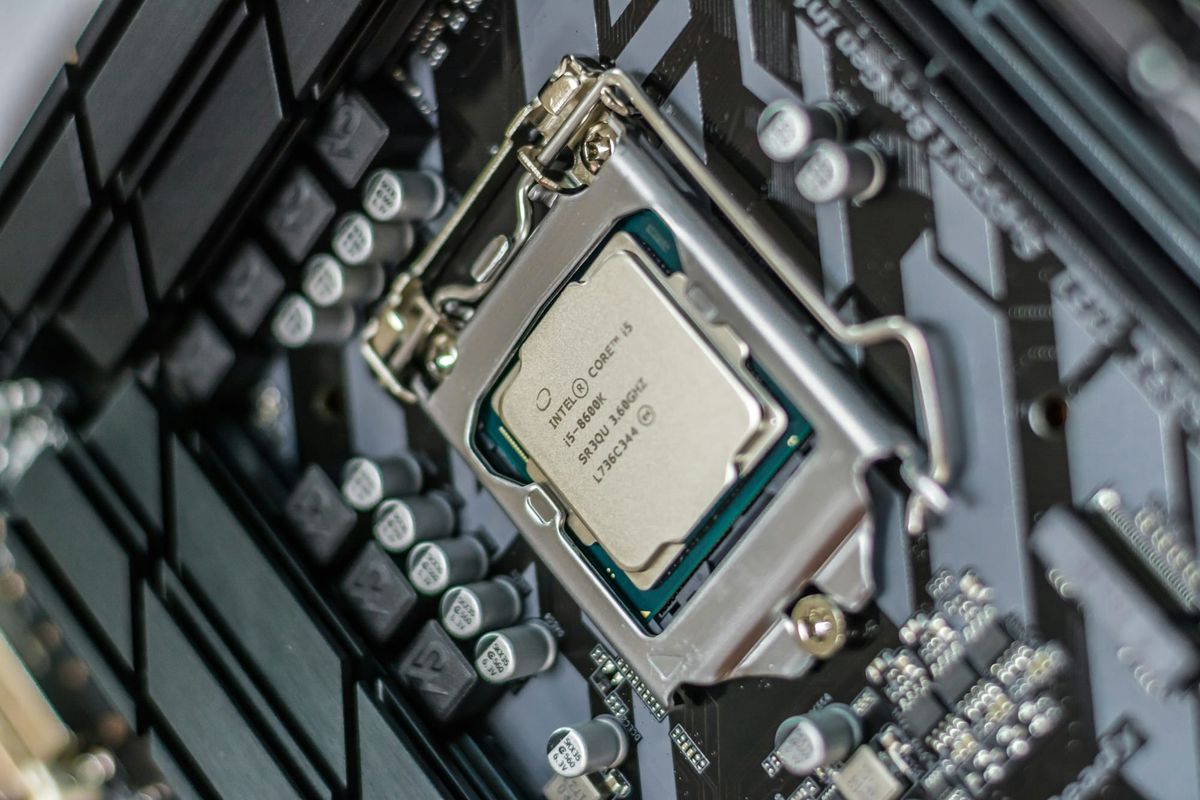
Intel’s buyback of full ownership of its Ireland fabrication facility underscores a strategic bet to secure CPU manufacturing capacity in the ‘era of AI.’

New platform focuses on runtime enforcement, auditability, and risk scoring for AI agents operating in regulated enterprise environments.

Despite $29M annual data budgets, most enterprises struggle with pipeline reliability, downtime, and delayed AI outcomes.

The Pentagon’s blacklisting of Anthropic over AI weapons and surveillance restrictions exposes a new class of governance risks for enterprise AI — and reveals how differently America’s leading AI companies view their obligations to the state.

Microsoft deepens its nuclear AI push with NVIDIA partnership, combining Azure cloud and NVIDIA GPU infrastructure to power advanced operations.

Platform updates target automation, continuous validation, and lifecycle protection for AI-driven systems.

Tencent’s ClawBot brings AI task execution into WeChat, intensifying competition in China’s fast-growing agent ecosystem.

Oracle launches a unified memory layer to give AI agents persistent state, improving continuity, governance, and scalability in enterprise systems.

NVIDIA and Emerald AI partner with major energy companies to create grid assets for energy resources and flexible speed-time for AI infrastructure.

Security models are no longer enough as multi-modal attacks overwhelm traditional controls, forcing a rethink of enterprise trust systems.

Confluent deal highlights IBM’s focus on streaming data infrastructure to support AI deployment, governance, and hybrid cloud integration.

Project SnowWork introduces tooling to move AI from experimentation to execution, targeting enterprise-wide adoption and measurable ROI.

The Promptfoo deal underscores the importance of model evaluation, red-teaming, and reliability in scaling enterprise AI deployments.

Hyundai and Kia will integrate NVIDIA DRIVE to support scalable autonomous systems, from ADAS to robotaxi development.

New partner program from Anthropic funds training, technical support, and go-to-market collaboration to accelerate enterprise adoption of Claude AI.

Friday, 13 March 2026 Enterprise AI Governance & Security Would your current AI governance framework survive a real audit, a regulatory inquiry, or an agentic system going off-script at machine speed? Across six sessions on the AI-360 BrightTalk channel, practitioners from Google, PayPal, IBM, Crown Cards, Santa Clara University School

Google, PayPal, IBM, and beyond tackle AI governance, MCP security, and agentic risk — on demand via the AI-360 BrightTalk channel.

Maritime Cyber Warnings From December Now Playing Out in the Hormuz Crisis


No more copy & pasting — Gemini in Sheets hits near-human expert performance on complex spreadsheet tasks, scoring 70.48% on SpreadsheetBench.

AI Security company acquisition season continues.

ABB and NVIDIA's factory AI push looks like efficiency. Anthropic's data suggests it's the white collar class that should be paying attention.

OpenAI launches GPT-5.4 with long-context support, improved reasoning, and enterprise-focused variants across ChatGPT, API, and Codex.

A new Agentforce-powered agent will give Formula 1 fans real-time updates while expanding AI-driven service and marketing capabilities.

Gemini 3.1 Flash-Lite arrives in preview, offering faster throughput for translation, moderation, UI generation, and other large workloads.

MCP is rapidly transforming how AI agents interact with enterprise systems, opening up a new class of supply chain, identity, and governance risks that security teams can’t ignore.

Microsoft adds detached operations and large AI model support to its Sovereign Cloud, enabling governance, productivity, and AI in closed environments.

Hefty cash burn threatens OpenAI’s longevity in the face of self-funded competitor.

Vercept’s “see and act” technology will be folded into Claude after Sonnet 4.6 posts a leap in OSWorld computer‑use benchmarks.

OpenAI introduces Frontier, an AI agent platform, and the Frontier Alliance with global consultancies to help enterprises deploy AI at scale.

New integrations bring zero-trust enforcement and AI-driven threat detection to industrial and energy infrastructure.

AI-powered code review targets complex vulnerabilities and suggests patches, with human approval built in.

Google DeepMind CEO warns that defensive systems must outpace AI-powered attack vectors as AGI approaches.

Hey Juno’s human-like AI interactions allow organizations to gather rich, actionable insights far beyond static surveys.

New scientific body aims to assess AI impacts, close knowledge gaps and address weaponization risks.

Partnership will build hyperscale, energy‑efficient AI infrastructure leveraging NVIDIA’s next-generation CPUs, GPUs, and networking technologies.

Claude and Claude Code integration with the Topaz platform will build secure, compliant AI agents, modernize legacy systems, and scale enterprise AI adoption across key functions.

Perplexity’s Model Council runs queries in parallel across multiple frontier models and synthesizes structured insights for enterprise users.

Funding supports model development, enterprise expansion, and multi-cloud infrastructure.
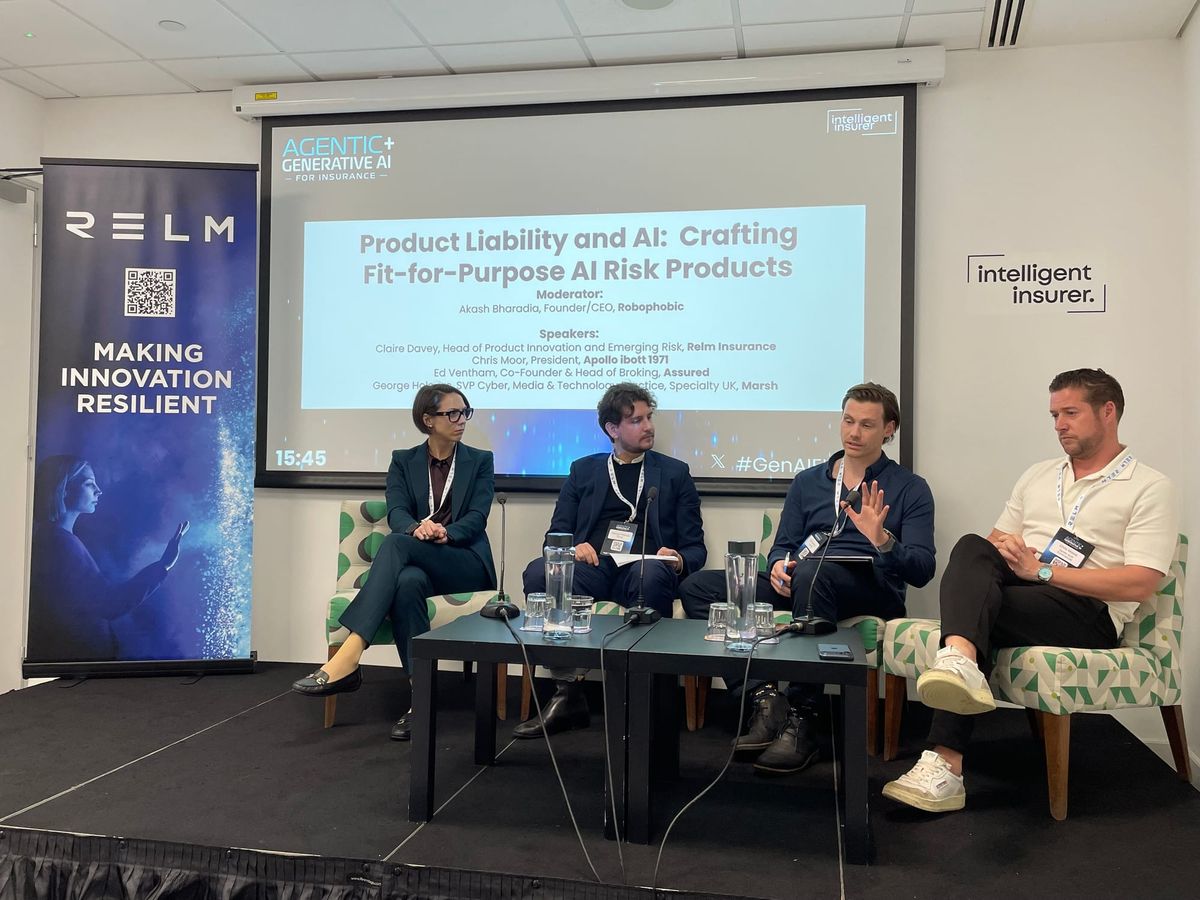
From the EU AI Act to cyber policy wording, panelists examined how emerging regulation and insurance structures intersect with enterprise AI deployment.

Modal now supports GLM-5 inference and deployment, enabling enterprise teams to test and integrate a large open-weights model via API and custom stacks.
![Emotional Perception AI Limited v. Comptroller General [2026]](https://images.unsplash.com/photo-1593115057322-e94b77572f20?crop=entropy&cs=tinysrgb&fit=max&fm=jpg&ixid=M3wxMTc3M3wwfDF8c2VhcmNofDJ8fGdhdmVsfGVufDB8fHx8MTc3MDgzNDQzN3ww&ixlib=rb-4.1.0&q=80&w=1200)
Supreme Court allows appeal in Emotional Perception AI v. Comptroller General, mandating EPO-aligned test for computer-implemented inventions under UK law.

Azure platform adds advanced reasoning model to support complex development and automated workflow execution.

GPT-5.3-Codex adds performance gains, real-time interaction, and broader task support for enterprise development environments.

As GenAI scales across enterprises, quantum advances are compressing security timelines, challenging encryption lifetimes, governance models, and breach assumptions.

Under a $151 Billion SHIELD contract, IBM will bring governed, interoperable, mission-grade AI to accelerate threat detection and response.

Multi-stage attacks leverage trusted repositories and automation to bypass existing AI guardrails.

The acquisition brings autonomous pipeline creation and verification into Snowflake’s platform as enterprises push to scale AI workloads faster.

Unified logs, metrics, and traces on Snowflake help teams spot anomalies sooner and keep AI applications running reliably at scale.

In parallel to its existing inquiry, the European Commission has launched a new investigation into how risks are assessed and mitigated in connection with the deployment of Grok’s functionalities in X.

Apiiro's Guardian Agent embeds preventive application security directly into AI coding workflows, shifting from reactive scanning to real-time risk prevention.

January 2026 OMB memo rescinds federal SBOM and attestation requirements, shifting security decisions to agencies.

WizExtend embeds security insights into CSP and VCS tools, aiming to reduce context switching and improve time-to-fix.

IBM’s Cost of a Data Breach Report 2025 reveals faster detection offsets rising AI-driven attacks, though US breach costs hit a record high.

Databricks opens up Delta Sharing to include Iceberg consumers and external catalogs, reducing friction in enterprise data exchange.

NVIDIA’s 2025 State of AI in Financial Services report details higher AI adoption, measurable ROI, and growing investment in open source and agentic AI.

Experts discuss the practical steps organizations must take to secure AI, protect data, and operationalize responsible deployments.
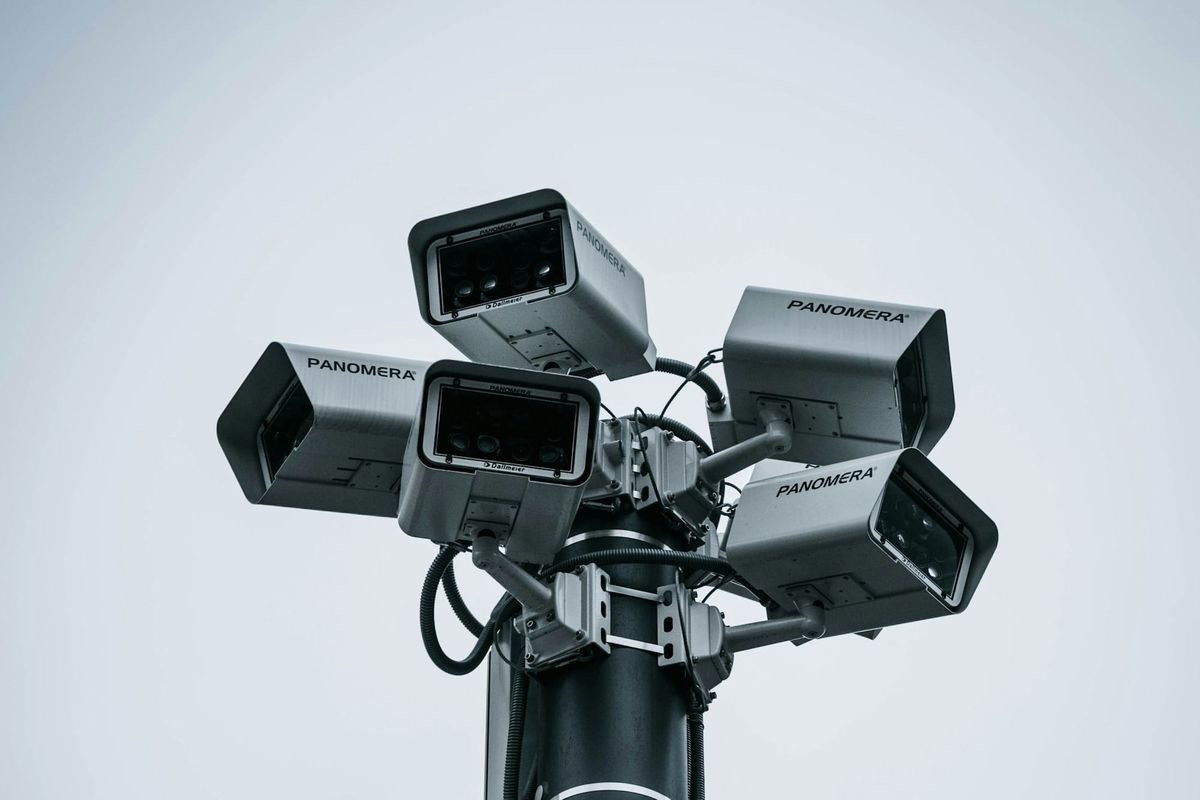
Tracking helps teams quickly assess exposure and prioritize response across evolving supply chain threats.

A new graph layer aims to unify AppSec, supply chain security, and posture management around shared context and decision history.

Update introduces workflow-aligned modules, unified dashboard, and operational enhancements.

UK, EU, and US authorities investigate Grok deepfakes, testing how existing safety laws apply to generative AI platforms and their operators.

Centralized control, security, and compliance are becoming core AI infrastructure.

New survey data shows limited oversight, rising breach costs, and growing friction between compliance and AI deployment.

The collaboration highlights how enterprise AI is evolving from decision support to a core engine for IP creation and scalable product development.