Wiz Unlocks Shadow Data Detection to Cut Cloud Storage Costs and Exposure
Added data efficiency insights to target redundant storage and improve enterprise cloud risk management.
OpenAI enforces macOS app updates and replaces signing credentials after identifying exposure in its GitHub-based build pipeline.
New agreement centers on AI safety, applying Claude to genomics, education, and workforce development across leading institutions.
Cycode’s Top AI Security Vulnerabilities to Watch out for in 2026 report outlines rising risks across prompt injection, data exposure, and AI supply chains.
New Muse Spark model upgrades Meta AI with multimodal input and parallel agents, and is expected to integrate across key Meta platforms such as WhatsApp, Instagram, and Facebook.
Project Glasswing brings AWS, Apple, Google, Microsoft, NVIDIA, and other key players together to address growing vulnerabilities in critical software systems.
New IBM–Arm initiative focuses on virtualization and interoperability to support AI workloads across mixed-architecture enterprise environments.
Partnership commits to a decade-long effort to advance hybrid algorithms critical for scaling AI and quantum computing.
Cycode’s Top AI Security Vulnerabilities to Watch out for in 2026 report outlines rising risks across prompt injection, data exposure, and AI supply chains.
Security models are no longer enough as multi-modal attacks overwhelm traditional controls, forcing a rethink of enterprise trust systems.
MCP is rapidly transforming how AI agents interact with enterprise systems, opening up a new class of supply chain, identity, and governance risks that security teams can’t ignore.
Hefty cash burn threatens OpenAI’s longevity in the face of self-funded competitor.
Google DeepMind CEO warns that defensive systems must outpace AI-powered attack vectors as AGI approaches.
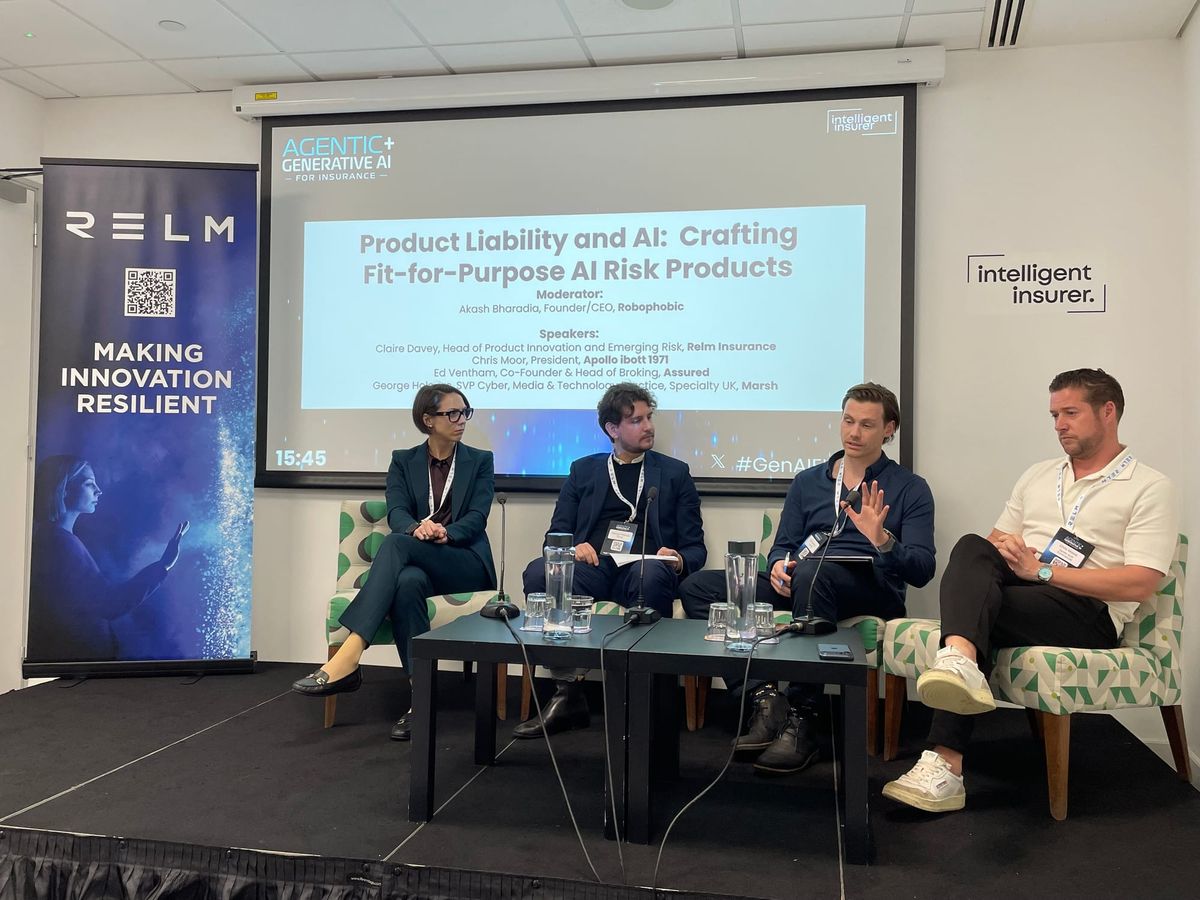
From the EU AI Act to cyber policy wording, panelists examined how emerging regulation and insurance structures intersect with enterprise AI deployment.
Supreme Court allows appeal in Emotional Perception AI v. Comptroller General, mandating EPO-aligned test for computer-implemented inventions under UK law.
As GenAI scales across enterprises, quantum advances are compressing security timelines, challenging encryption lifetimes, governance models, and breach assumptions.
Under a $151 Billion SHIELD contract, IBM will bring governed, interoperable, mission-grade AI to accelerate threat detection and response.
In parallel to its existing inquiry, the European Commission has launched a new investigation into how risks are assessed and mitigated in connection with the deployment of Grok’s functionalities in X.
IBM’s Cost of a Data Breach Report 2025 reveals faster detection offsets rising AI-driven attacks, though US breach costs hit a record high.
Experts discuss the practical steps organizations must take to secure AI, protect data, and operationalize responsible deployments.
New IBM–Arm initiative focuses on virtualization and interoperability to support AI workloads across mixed-architecture enterprise environments.
Partnership commits to a decade-long effort to advance hybrid algorithms critical for scaling AI and quantum computing.
Expanded Texas facility reflects rising need for dedicated AI infrastructure, with capacity and long-term compute implications.
Google security team members Priya Pandey, Aron Eidelman, and Leonid Yankulin explain why probabilistic AI is breaking traditional DevSecOps, and how runtime security and safer observability must evolve to keep sensitive data out of your logs.
New disclosures emphasize compute scale, pricing pressure, and reliability as enterprise AI adoption accelerates.
Intel’s buyback of full ownership of its Ireland fabrication facility underscores a strategic bet to secure CPU manufacturing capacity in the ‘era of AI.’