Fable 5 Returns
US export controls on Fable 5 and Mythos 5 have lifted. Anthropic details the Amazon-reported bypass, its fix, and a new Glasswing-backed framework for scoring AI jailbreak severity
Nearly half of everything you've watched on this channel in recent months has clustered around five conversations, and all five keep circling the same uncomfortable subject.
Nine month design cycle, deployment from end 2026, gigawatt scale rollout planned with Microsoft.
with granular admin controls, scoped API keys, multi-account support and a new debugging tool for MCP connections.
Agents plan, checklist and complete coding jobs unsupervised, with status, pause, resume and clear commands giving developers oversight throughout.
OpenAI's Daybreak shifts cyber AI focus from finding flaws to fixing them, pairing an upgraded GPT-5.5-Cyber and Codex Security with a new vendor partner programme and an open-source patching drive.
The road to hell is paved with good intentions, and most of them arrive as newsletters. On unsubscribe culture, marketing bullshit, and why your voice is more welcome here than your inbox space.
A government order pulls Fable 5 offline, OpenAI talks up its own safety testing, and Musk buys Cursor for $60bn. Plus: the ChatGPT story that makes the rest look small.
Jeff Bezos and Sundar Pichai are in the corner playing pool.
Pope Leo's encyclical on AI is one of the most serious documents written on the subject. The launch optics undermined it before most people read a word.
As Elon Musk testifies in Oakland, the lawsuit over OpenAI’s for-profit conversion establishes a high-stakes benchmark for AI governance and fiduciary duty.
The new partnership gives Cursor unprecedented compute access and gives SpaceX a path to dominate agentic software development.
While it promises rapid vulnerability detection, the emergence of Anthropic’s latest AI raises questions about security risks, defensive preparations, and the future of knowledge work.
Cycode’s Top AI Security Vulnerabilities to Watch out for in 2026 report outlines rising risks across prompt injection, data exposure, and AI supply chains.
Security models are no longer enough as multi-modal attacks overwhelm traditional controls, forcing a rethink of enterprise trust systems.
MCP is rapidly transforming how AI agents interact with enterprise systems, opening up a new class of supply chain, identity, and governance risks that security teams can’t ignore.
Hefty cash burn threatens OpenAI’s longevity in the face of self-funded competitor.
Google DeepMind CEO warns that defensive systems must outpace AI-powered attack vectors as AGI approaches.
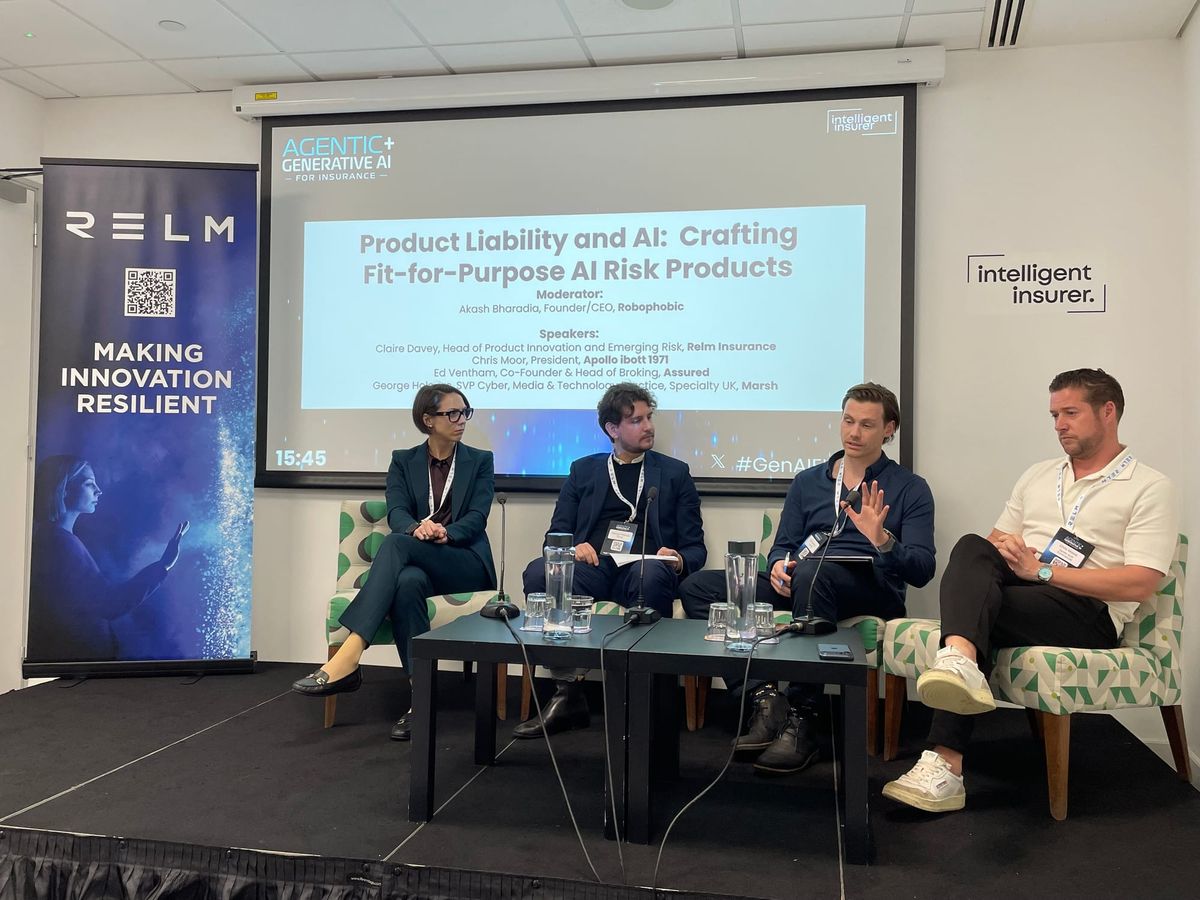
From the EU AI Act to cyber policy wording, panelists examined how emerging regulation and insurance structures intersect with enterprise AI deployment.
Supreme Court allows appeal in Emotional Perception AI v. Comptroller General, mandating EPO-aligned test for computer-implemented inventions under UK law.
Experts discuss the practical steps organizations must take to secure AI, protect data, and operationalize responsible deployments.
Sofya deployed Llama models with knowledge distillation techniques, reducing provider documentation time by 30% while maintaining 90% customer satisfaction.
The marketplace debuts with 200+ partners offering pre-built AI components, addressing a key bottleneck in enterprise AI adoption—time and expertise to build capabilities.
The system automates converting meeting transcripts to PRDs and development tickets using specialized agents powered by Mistral Large 2, eliminating manual effort.
Med-Gemini, a multimodal model fine-tuned on de-identified medical data, achieves 91.1% accuracy on medical licensing exams and interprets 3D scans.
Anthropic's Claude 3.7 Sonnet sets new benchmarks in coding abilities. Novo Nordisk uses it to reduce clinical report writing from 12 weeks to 10 minutes.
Claude 3.7 Sonnet, the first hybrid reasoning model, will be tested by scientists to compress decades of scientific progress into shorter timeframes.