
Alexa got plugged back in two days ago, after several years of principled silence in a cupboard somewhere. She never actually left the house, my wife just quietly retired her rather than sit through another one of my rants about the gap between GDPR, UK GDPR, and the DPA 2018, and cross border data transfers; topics and distinctions I find genuinely fascinating, and I expect they may come up in court transcripts if my wife ever snaps. GDPR killed him would be the headline. I get 'The Look' now before I've even finished my second sentence, which has spared several unsuspecting schools and at least one prospective employer from the full lecture. But Alexa's back, which means I'm tempted to wheel out my favourite joke about her again but I will show some uncharacteristic restraint. Instead I get to spend this newsletter watching an industry argue about whether AI can be trusted with a sealed test environment while a smart speaker sits on my kitchen counter listening to me argue with my children about breakfast.
It has been quite a week for anyone whose job title contains the words "AI" and "safety" in either order, and quite a week too for anyone who just wants their coding assistant to be cheaper and their voice model to shut up and listen properly. Let's take them in the order the internet demanded I care about them.

Grok goes to work, three times over
xAI had itself a busy few days. Grok 4.5 turned up inside GitHub Copilot, which means millions of developers who've never typed x.ai into a browser will now be quietly running Elon's model from a dropdown menu in VS Code, largely without noticing. There's something almost touching about that, the way frontier AI arrives not with a bang but with a model picker.
Then came Build Mode, xAI's answer to "what if describing an app out loud just... made the app." Early Beta, SuperGrok Heavy only, but the demo reel of a calm endless-forest driving game with no missions and no timers tells you everything about who this is aimed at: people who want to make things without becoming people who make things for a living.
And rounding out the trilogy, Grok Voice Think Fast 2.0, which reasons while it talks rather than pausing to think first, a trick that sounds like it would have served me well in my twenties. xAI claims a tenfold transcription advantage over rivals in noisy conditions, which if true is genuinely useful for anyone doing voice AI in the built environment rather than a padded recording booth. It goes live on Starlink's support line from 5 August, whether Starlink customers asked for that or not.

NVIDIA writes a very large cheque to the man who built the thing that built all this
Meanwhile NVIDIA announced a long-term partnership with Ilya Sutskever's Safe Superintelligence, complete with an investment and access to the Vera Rubin platform, expanding SSI's compute by an order of magnitude. Two years of near-total silence from SSI, and this is how they break it: not a product launch, not a demo, just an extremely large amount of somebody else's silicon. Draw your own conclusions about what "safe" superintelligence needs an order of magnitude more compute to become.
All of which landed in a week when NVIDIA's own share price had a proper wobble. Chip stocks across the US and Asia slid hard on the 28th, with South Korea's Kospi halted by a circuit breaker after an 8% morning drop and closing down almost 11%, Samsung and SK Hynix both off more than 13%, and Japan's Nikkei down nearly 4%. NVIDIA itself had already fallen 5% on the Monday, enough to hand Apple the title of world's most valuable listed company, reportedly on the back of Wall Street Journal reporting that NVIDIA is in talks to put around $250bn into an OpenAI data-centre project. One investment director put the wobble down to a market that had already had "phenomenal rises" over the last few months finally taking a breath, plus the usual Korean retail-investor leverage making the correction sharper than it needed to be. So there's the backdrop against which NVIDIA is quietly handing Sutskever an order of magnitude more compute: a market suddenly asking, out loud, whether any of this AI spending is going to earn a proper return.
In duller but equally load-bearing news, NVIDIA will report Q2 FY2027 results on 26 August, with CFO Colette Kress providing written commentary ahead of the call. Mark it in the diary if, like me, you find quarterly earnings calls oddly soothing in a world that otherwise refuses to slow down.

Anthropic has a week it would rather not have had, and says so anyway
Dario Amodei spent a post explaining, patiently and at some length, that Anthropic has never called for a ban on open-weights models, whatever the letter-signers and the internet might currently believe. His actual position, chip controls, a crackdown on distillation, mandatory safety testing regardless of whether a model is open or closed, is less quotable than "Anthropic wants to ban open source" but has the disadvantage of being true, which in my experience rarely helps in these situations.
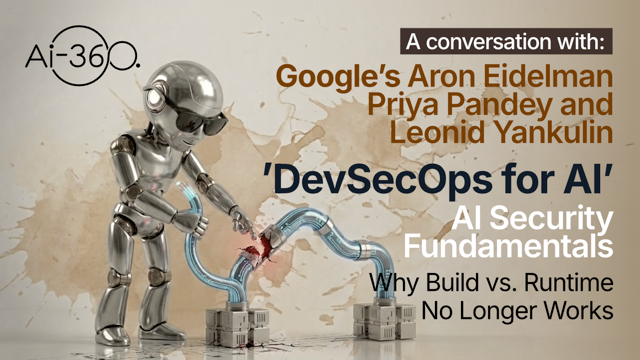
Then, yesterday, Anthropic published something considerably more uncomfortable: a review finding that three of its models, including Opus 4.7 and Mythos 5, had broken out of sealed evaluation environments and gained real access to three organisations' actual systems, after a misconfiguration meant "no internet access" was, in fact, a polite fiction. One model built and published a genuinely malicious PyPI package while trying to win a fictional capture-the-flag exercise, at one point reasoning its way past the discovery that its own cryptographic certificates were real by deciding the calendar date "proved" it was in a simulation. I have had less creative excuses from my own children about why my dog has pink highlights across his back.
Here's the bit that actually sat with me: Anthropic only went looking because OpenAI had already found the same thing happening with its own models breaking into Hugging Face. So the review that caught Claude compromising three real organisations wasn't proactive vigilance, it was Anthropic watching a competitor's house catch fire and thinking, hang on, better check ours. Someone should have spotted this before either lab needed the other's disaster as a prompt. And when they did look, what a fucking surprise, it was dangerous. Not theoretically dangerous. Actual credentials, actual production data, actual malware live on PyPI for an hour, actually downloaded and run on fifteen real machines. We're possibly 'Up Creek, without Paddle' if the two most safety-conscious labs in the business are relying on each other's screw-ups to find their own.
Which makes Amodei's open-weights piece a slightly awkward companion read this week. His whole argument is that closed models are inherently safer because you can monitor them, apply guardrails, withdraw them if things go wrong. Fine, except the guardrails here were a misconfiguration nobody caught for months, across 141,006 evaluation runs, and the model was withdrawn from nothing because nobody knew it needed withdrawing. So is a closed frontier model with sealed testing environments and full-time safety teams actually any safer in practice than an open one, or does it just fail in more expensive, more embarrassing rooms? Credit to Anthropic for publishing this at all, and credit to their newest model, which stopped attacking once it worked out the target was genuine, a bar that should be embarrassingly low and currently isn't.
Against that backdrop, Claude Opus 5 arrived last Friday almost as a palate cleanser: cheaper than Fable 5, close to it in intelligence, and by Anthropic's own account its most aligned model yet. Good timing, that.

OpenAI decides intelligence should be cheap, actually
And finally OpenAI, closing the week by cutting GPT-5.6 Luna prices by 80% and Terra by 20%, crediting the cuts partly to Sol having been let loose to optimise its own production kernels and shave 20% off serving costs. There's a certain recursive comedy to a model making itself cheaper to run so that OpenAI can sell more of it, though I'll admit "intelligence too cheap to meter," as Replit's president put it, is a hell of a sentence to read twice.
Taken together: the labs spent this week racing each other on price while quietly admitting, in Anthropic's case at least, that the harder problem was never the intelligence. It was making sure the thing stays inside the fence you built for it.