OpenAI has published two reports tracking how enterprises are adopting agentic AI, finding that firms in the top 10% of usage now generate 8.3 times as many output tokens per active user as typical firms, up from 2.6 times in January, the company said on 12 August 2026.

The reports, Enterprise Signals and a companion working paper titled How Organizations Use AI: Evidence from ChatGPT, found that Codex generated 64% of combined Codex and ChatGPT output tokens among enterprise customers as of June, which OpenAI said reflects a shift toward more substantive, delegated agentic work rather than simple question-answering.

Frontier firms also use advanced capabilities such as Plugins and skills far more often. Weekly active users at frontier firms used Plugins 21% of the time and skills 19% of the time, against 9% and 3% respectively at typical firms. Internally, 95% of OpenAI's own employees use Plugins weekly.

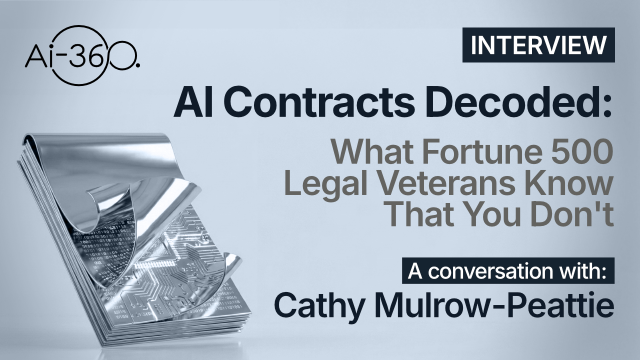
AI Contracts Decoded: What Fortune 500 Legal Veterans Know That You Don’t
When Microsoft refuses to negotiate indemnification with their biggest customers, what does that mean for your AI vendor contracts? When IBM data shows 97% of AI breaches stem from compliance failures—most being supply chain-related—who holds liability? When employees download shadow AI tools with zero cybersecurity controls, what recourse does your company have? None. Cathy Mulrow-Peattie brings perspective most outside counsel lack: Fortune 500 in-house experience at MasterCard and Omnicom, General Counsel at an AI startup, now advising enterprises. She starts with business goals before technology, technology before contracts—because she’s been in the hot seat when governance fails. You’ll learn: • Why 10-year AI contracts create risk and 90-day pilots with exit strategies are essential • The IP paradox: machine-generated outputs aren’t copyrightable but terms of use matter • How LLM providers retain “certain uses” of your data and when private instances become mandatory • Why contractual risk allocation to key vendors is your only viable strategy Key topics: Supply chain due diligence • The 97% compliance failure rate • Shadow AI liability traps • Benchmarking gaps • Hallucination disclaimers • GDPR/CCPA requirements • NY DFS Part 500 • Acceptable use policies • Dark web data sourcing • Evolutionary AI governance For: CISOs, CIOs, Chief Legal Officers, and compliance leaders navigating AI vendor relationships Contractual realities from someone who’s negotiated with Microsoft, advised Fortune 500s, and managed governance failures.

Agentic adoption is spreading well beyond software engineering. Since February, weekly active enterprise Codex users grew 108 times in legal, 41 times each in sales and recruiting, and 26 times in marketing, compared with a fivefold increase in engineering. At Virgin Atlantic, OpenAI said, engineering teams now use Codex to refactor legacy code in 30 minutes rather than two weeks.

Among the US public companies examined in the working paper, enterprises that had adopted AI showed stronger financial measures than non-adopters, holding more assets, employing more workers and investing more heavily in R&D.

The research also found early-career employees use AI more heavily than executives, sending 13 more messages per week six months after adoption, contrary to survey-based findings that typically show higher usage among senior leaders.

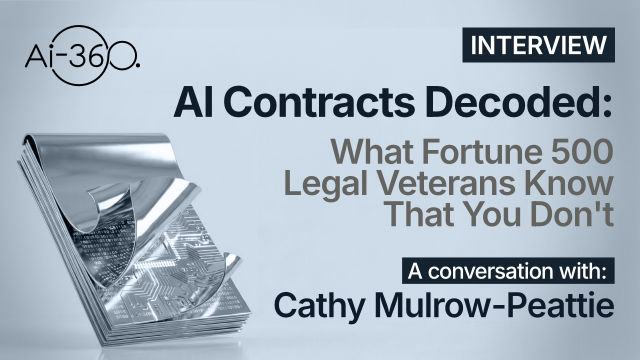
AI Contracts Decoded: What Fortune 500 Legal Veterans Know That You Don’t
When Microsoft refuses to negotiate indemnification with their biggest customers, what does that mean for your AI vendor contracts? When IBM data shows 97% of AI breaches stem from compliance failures—most being supply chain-related—who holds liability? When employees download shadow AI tools with zero cybersecurity controls, what recourse does your company have? None. Cathy Mulrow-Peattie brings perspective most outside counsel lack: Fortune 500 in-house experience at MasterCard and Omnicom, General Counsel at an AI startup, now advising enterprises. She starts with business goals before technology, technology before contracts—because she’s been in the hot seat when governance fails. You’ll learn: • Why 10-year AI contracts create risk and 90-day pilots with exit strategies are essential • The IP paradox: machine-generated outputs aren’t copyrightable but terms of use matter • How LLM providers retain “certain uses” of your data and when private instances become mandatory • Why contractual risk allocation to key vendors is your only viable strategy Key topics: Supply chain due diligence • The 97% compliance failure rate • Shadow AI liability traps • Benchmarking gaps • Hallucination disclaimers • GDPR/CCPA requirements • NY DFS Part 500 • Acceptable use policies • Dark web data sourcing • Evolutionary AI governance For: CISOs, CIOs, Chief Legal Officers, and compliance leaders navigating AI vendor relationships Contractual realities from someone who’s negotiated with Microsoft, advised Fortune 500s, and managed governance failures.

Share this post
The link has been copied!