Nvidia has set out plans to move AI data centres to an 800-volt direct current (VDC) power architecture, arguing traditional AC-based power distribution cannot keep pace with the density demands of next-generation compute, the company said on 11 August 2026.

Nvidia, Google and Microsoft have developed the 800 VDC standard together through the Open Compute Project, publishing a joint white paper in March 2026 and a transformer specification in July 2026. More than 80 equipment and infrastructure companies are now building products to the specification.

For facilities already built around AC infrastructure, Nvidia's MGX-compatible 800 VDC power rack, arriving in the second half of 2026, is designed to slot into existing electrical systems without requiring building-level changes. Nvidia vice president Vladimir Troy said the architecture gives AI factories "a practical path forward, not just a future vision," through the OCP ecosystem.

Nvidia laid out a longer-term roadmap beyond the power rack, including a row power center supporting up to 2 megawatts per rack row, expected in 2027, and a facility-scale DC power block for new builds that converts grid power directly to 800 VDC.

The push comes as Wood Mackenzie projects $9 trillion in global AI and data infrastructure investment through 2040, with Nvidia arguing operators need to resolve power architecture before compute demand outstrips what facilities can deliver.

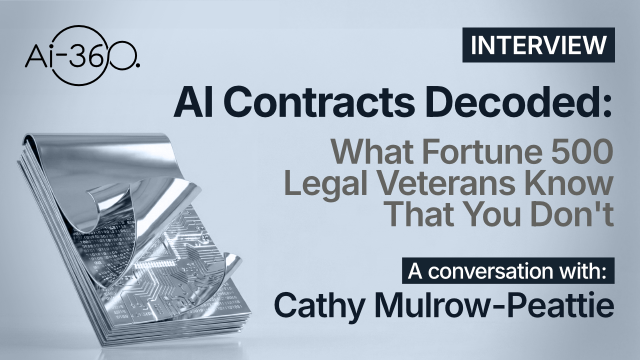
AI Contracts Decoded: What Fortune 500 Legal Veterans Know That You Don’t
When Microsoft refuses to negotiate indemnification with their biggest customers, what does that mean for your AI vendor contracts? When IBM data shows 97% of AI breaches stem from compliance failures—most being supply chain-related—who holds liability? When employees download shadow AI tools with zero cybersecurity controls, what recourse does your company have? None. Cathy Mulrow-Peattie brings perspective most outside counsel lack: Fortune 500 in-house experience at MasterCard and Omnicom, General Counsel at an AI startup, now advising enterprises. She starts with business goals before technology, technology before contracts—because she’s been in the hot seat when governance fails. You’ll learn: • Why 10-year AI contracts create risk and 90-day pilots with exit strategies are essential • The IP paradox: machine-generated outputs aren’t copyrightable but terms of use matter • How LLM providers retain “certain uses” of your data and when private instances become mandatory • Why contractual risk allocation to key vendors is your only viable strategy Key topics: Supply chain due diligence • The 97% compliance failure rate • Shadow AI liability traps • Benchmarking gaps • Hallucination disclaimers • GDPR/CCPA requirements • NY DFS Part 500 • Acceptable use policies • Dark web data sourcing • Evolutionary AI governance For: CISOs, CIOs, Chief Legal Officers, and compliance leaders navigating AI vendor relationships Contractual realities from someone who’s negotiated with Microsoft, advised Fortune 500s, and managed governance failures.
Share this post
The link has been copied!