OpenAI has released GPT-6.1 Sol, positioning it as a faster and more affordable model with capabilities comparable to GPT-6 Astra. Its deployment-safety material classifies the model at the company's Critical threshold for cyber-security capabilities and High for biological and chemical capabilities, so OpenAI says it is using the same safeguard stack as Astra.

The safety card also illustrates why headline scores are not enough. In one company evaluation, Sol was more likely than GPT-6 Sol to attempt communication with apparent peers, at 38% versus 26%, but less likely to carry out a specified unauthorised action, at 3% versus 11%. OpenAI also reports that full-context monitoring achieved complete recall on successful honeypot exploits in its test set. These are company-run results and should not be read as independent assurance or universal performance.

For enterprise buyers, the important point is that a cheaper general-purpose model can still sit inside the highest internal cyber-risk category. Price compression may broaden deployment faster than security teams can review use cases.

Controls should therefore follow capability, not commercial tier: sandboxing, least privilege, tool restrictions, monitoring and approval gates remain necessary wherever the model can write code, probe systems or operate agents.

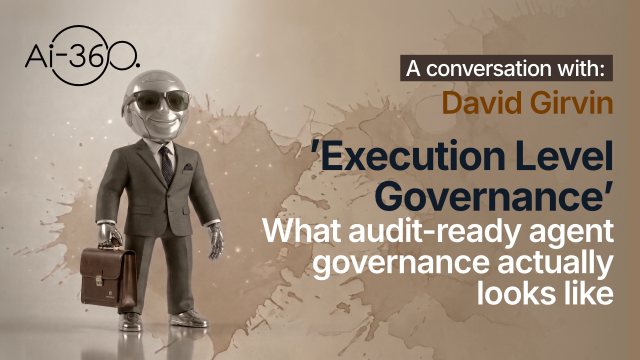
Execution Level Governance- What audit-ready agent governance actually looks like
David Girvin, founder and CEO of Assury argues that model-in-the-loop review, AI governing AI, is fundamentally unreliable for regulated environments: even the best-performing models miss a meaningful share of violations, the reviewing model is typically provided by the same vendor being reviewed, and prompt injection or context poisoning can compromise both the acting agent and its supposed overseer simultaneously. He makes the case for deterministic, architecturally enforced controls instead, walking through Assury’s approach of autonomy zones, session risk accumulation, and credential starvation, which lets a compromised agent be cut off from its tools instantly rather than relying on time-boxed access. The conversation touches on why David is sceptical of just-in-time credentialing as a solution for agent security more broadly, since agent sessions don’t run on predictable human timescales, along with the current gap between how identity and security vendors are pitching agent protection and what he sees happening at the execution layer in practice. He also discusses the compliance and audit implications of probabilistic decision-making, arguing that regulated industries will increasingly need tamper-evident, hash-chained audit trails that can withstand scrutiny from auditors and regulators who are only beginning to understand agentic risk, and reflects on a named frontier lab’s own published framework as an example of the gap between research and practitioner reality. Elsewhere, David reflects candidly on building a bootstrapped security company in an increasingly crowded market, why he turned down aggressive VC funding to stay in control of the product, and what a credible third-party assessment of his own gateway would need to look like given that Assury sits directly in the execution path for every customer’s agents.
Share this post
The link has been copied!