The European Commission has ordered Meta to restore free access to its WhatsApp Business API for third-party AI assistants, and to maintain that access for the duration of an ongoing antitrust investigation into the company's conduct.

The Commission opened its investigation in December 2025 after Meta introduced a new policy on 15 October 2025 banning third-party general-purpose AI assistants from the WhatsApp for Business API. In February 2026 the Commission issued a Statement of Objections, preliminarily concluding that interim measures might be necessary to prevent serious and irreparable harm to competition. A supplementary Statement of Objections followed in April, setting out the Commission's intention to act.

Meta briefly revised its position in March 2026, reinstating third-party access, but subject to a fee which the Commission concluded was, in practice, equivalent to the original ban.

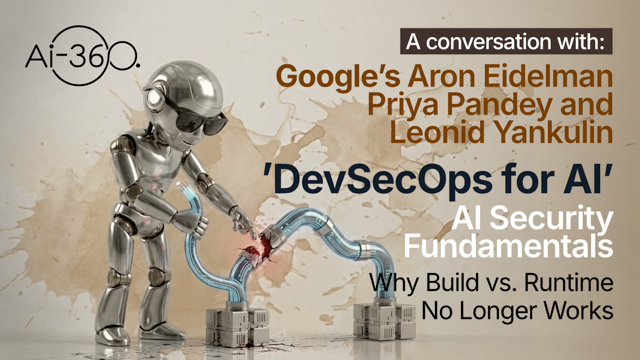
DevSecOps for AI: Why 90% Stays the Same—and the 10% That Changes Everything
Is your DevSecOps pipeline ready for AI—or just ready for the AI you tested last week? AI systems behave probabilistically. The same prompt injection attack can succeed 50 times in a row, then fail completely the next minute. Traditional shift-left testing was built for determinism. AI isn’t. That gap is where risk lives. Three members of Google’s security advocacy team break down what actually changes—and what doesn’t—when AI enters your DevSecOps pipeline. You’ll learn: • Why 90% of AI security is still traditional security—and exactly where the novel 10% creates new exposure • Why DevSecOps transformations fail within a year—and the top-down cultural shift that prevents it • How the latest DORA research shows AI agents amplify existing practices, good or bad, at scale • What AI runtime security (e.g., Model Armor) does that a WAF cannot • Why AI logs capturing PII and system instructions in plain text demand a new approach to observability Key topics: Non-determinism in AI testing • Continuous evaluation vs. pre-deployment scans • Model Armor & runtime security layers • Sensitive data redaction in logs • Prompt injection defense-in-depth • Agentic workload security • WAF limitations with AI agents • DevSecOps governance & top-down culture For CISOs, DevSecOps leads, and security architects navigating AI adoption: the pipeline you spent three years building is mostly still valid. This session tells you exactly what to add. All viewers will receive a c’heat sheet’ compiling links galore courtesy of Aron Eidelman.

The June 9th decision orders Meta to reinstate access on the same terms and conditions that existed before 15 October 2025, when access was free of charge. Meta must comply within five working days. The Commission found that Meta holds a dominant position in the European Economic Area market for consumer communication applications.

"In rapidly evolving markets, competition can be lost long before a final decision is adopted," said Teresa Ribera, the Commission's Executive Vice-President for Clean, Just and Competitive Transition. "These interim measures will safeguard competition in the growing market for AI assistants, by preserving a key entry point to reach consumers in Europe — WhatsApp — and allowing AI companies to innovate, scale up and reach their full potential."

Should Meta fail to comply, it faces fines of up to ten per cent of its total annual turnover, plus daily periodic penalty payments of up to five per cent of average daily turnover.

Meta has said it will appeal. The substantive investigation into the full merits of the case remains ongoing, with no fixed legal deadline for its conclusion.

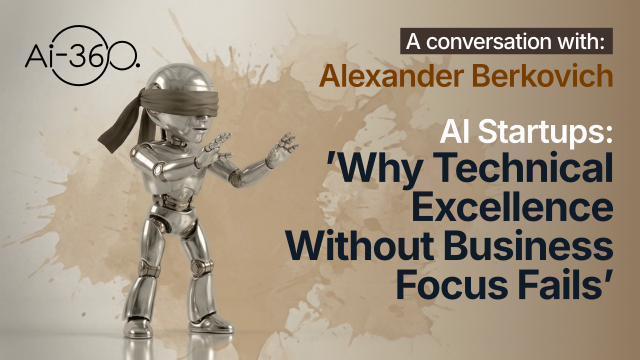
`AI Startups: Why Technical Excellence Without Business Focus Fails`
`AI Startups: Why Technical Excellence Without Business Focus Fails` How many technical teams at an early-stage AI startup can accurately describe their ideal customer? According to Alexander Berkovich, a principal engineer with close to 20 years across HP Research Labs, GE Healthcare, and Blackmagic Design: close to zero. That gap — between building impressive technology and building what clients actually need — is where AI startups quietly lose. Stewart Tinson talks to Alexander about the structural, cultural, and human factors that determine whether a technical team and its business leadership can function as one. Speaker: Alexander Berkovich, AI startup advisor and former principal engineer (HP Research Labs, GE Healthcare, Blackmagic Design, Akridata) You’ll learn: • Why hiring cheaper, junior technical staff to preserve runway slows development and increases churn • How documentation and process actively accelerate speed — not slow it down • Why “technically difficult” often means something entirely different to the CEO and CTO • How to structure POC feedback loops so client insight reaches the product roadmap • What a non-technical founder should actually look for when hiring a CTO • Why the business case — not the technology — must be your starting point Key topics: Tech-business gap • Startup hiring • Documentation & process • MVP scoping • CEO-CTO communication • ICP awareness • POC feedback • Founder-CTO relationship • AI differentiation • Team culture For CTOs, technical founders, and early-stage investors who need to understand why brilliant technology alone doesn’t build a company.
Share this post
The link has been copied!