India has frozen the final regulatory approvals Starlink needs to launch commercial operations in the country, according to Bloomberg, citing people familiar with the matter. The decision lands at an acutely uncomfortable moment: SpaceX's IPO, expected to raise $75 billion at a $1.75 trillion valuation, is days away, with pricing on the 11th, and trading on the 12th.

Security agencies under India's Ministry of Home Affairs withheld the clearances after reports emerged that Starlink terminals were being used inside Iran during the ongoing Middle East conflict, despite the service not being licensed to operate there. The episode heightened fears in New Delhi about its ability to control a US-based operator during geopolitical tensions.

The decision took effect on June 9, 2026. SpaceX had already cleared the two biggest regulatory hurdles in India, securing both a Unified License and GMPCS authorisation from the Department of Telecommunications in 2025.

In a social media post Starlink VP of operations Lauren Dreyer said the company "remains in active and productive discussions with the Government of India contrary to misleading stories based upon unsubstantiated claims from anonymous sources."

Financial disclosures ahead of the IPO showed that Starlink's customer growth is already slowing.

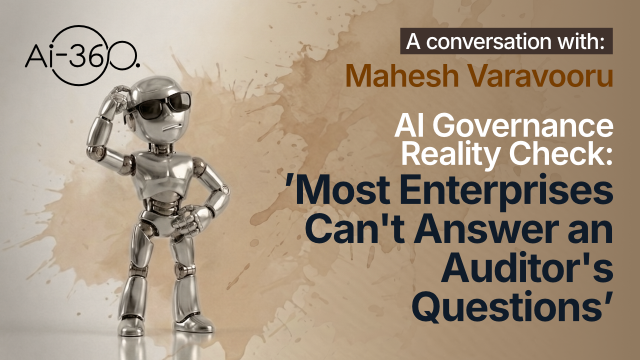
AI Governance Reality Check: Most Enterprises Can’t Answer an Auditor’s Questions
When an auditor asks how your AI made a decision, can you answer? For most enterprises right now, the answer is no. AI adoption has outpaced risk management since ChatGPT’s arrival. Boards now recognise AI as a systemic risk to reputation, intellectual property, and regulatory standing — not just a productivity tool. Yet most organisations remain at Level 1 governance: policies on paper, basic intake processes, and zero visibility into what their agents are doing in production. Speakers: Mahesh Varavooru, Founder at Secure AI, and Stewart Tinson, Project Director at AI-360 You’ll learn: • Why paper-based governance will fail an EU AI Act audit — and what Level 3 looks like in practice • How runtime guardrails work as an AI-era firewall, intercepting every prompt and LLM response in real time • How to defend against prompt injection, jailbreaks, hallucination, and PII/PHI leakage in production systems • Why multi-agent systems amplify governance risk — and how to govern them at scale • How to reach Level 3 maturity in weeks to months — and make governance an enabler, not a blocker Key topics: AI Governance Maturity (L1–L3) • Runtime Guardrails • Prompt Injection Defence • Hallucination Management • Shadow AI & Data Loss • Multi-Agent Security • EU AI Act Compliance • Board KPIs • Human-in-the-Loop • DevSecOps Integration Essential viewing for CISOs, CIOs, Chief Risk Officers, and compliance leaders scaling AI in regulated environments.
Share this post
The link has been copied!