Tencent Embeds OpenClaw AI Agent into WeChat, Expanding Platform-Based Automation
Tencent’s ClawBot brings AI task execution into WeChat, intensifying competition in China’s fast-growing agent ecosystem.
Discover more


Tencent’s ClawBot brings AI task execution into WeChat, intensifying competition in China’s fast-growing agent ecosystem.

Oracle launches a unified memory layer to give AI agents persistent state, improving continuity, governance, and scalability in enterprise systems.

NVIDIA and Emerald AI partner with major energy companies to create grid assets for energy resources and flexible speed-time for AI infrastructure.

Security models are no longer enough as multi-modal attacks overwhelm traditional controls, forcing a rethink of enterprise trust systems.

Confluent deal highlights IBM’s focus on streaming data infrastructure to support AI deployment, governance, and hybrid cloud integration.

Project SnowWork introduces tooling to move AI from experimentation to execution, targeting enterprise-wide adoption and measurable ROI.

The Promptfoo deal underscores the importance of model evaluation, red-teaming, and reliability in scaling enterprise AI deployments.

Hyundai and Kia will integrate NVIDIA DRIVE to support scalable autonomous systems, from ADAS to robotaxi development.
Security models are no longer enough as multi-modal attacks overwhelm traditional controls, forcing a rethink of enterprise trust systems.

MCP is rapidly transforming how AI agents interact with enterprise systems, opening up a new class of supply chain, identity, and governance risks that security teams can’t ignore.

Hefty cash burn threatens OpenAI’s longevity in the face of self-funded competitor.

Google DeepMind CEO warns that defensive systems must outpace AI-powered attack vectors as AGI approaches.
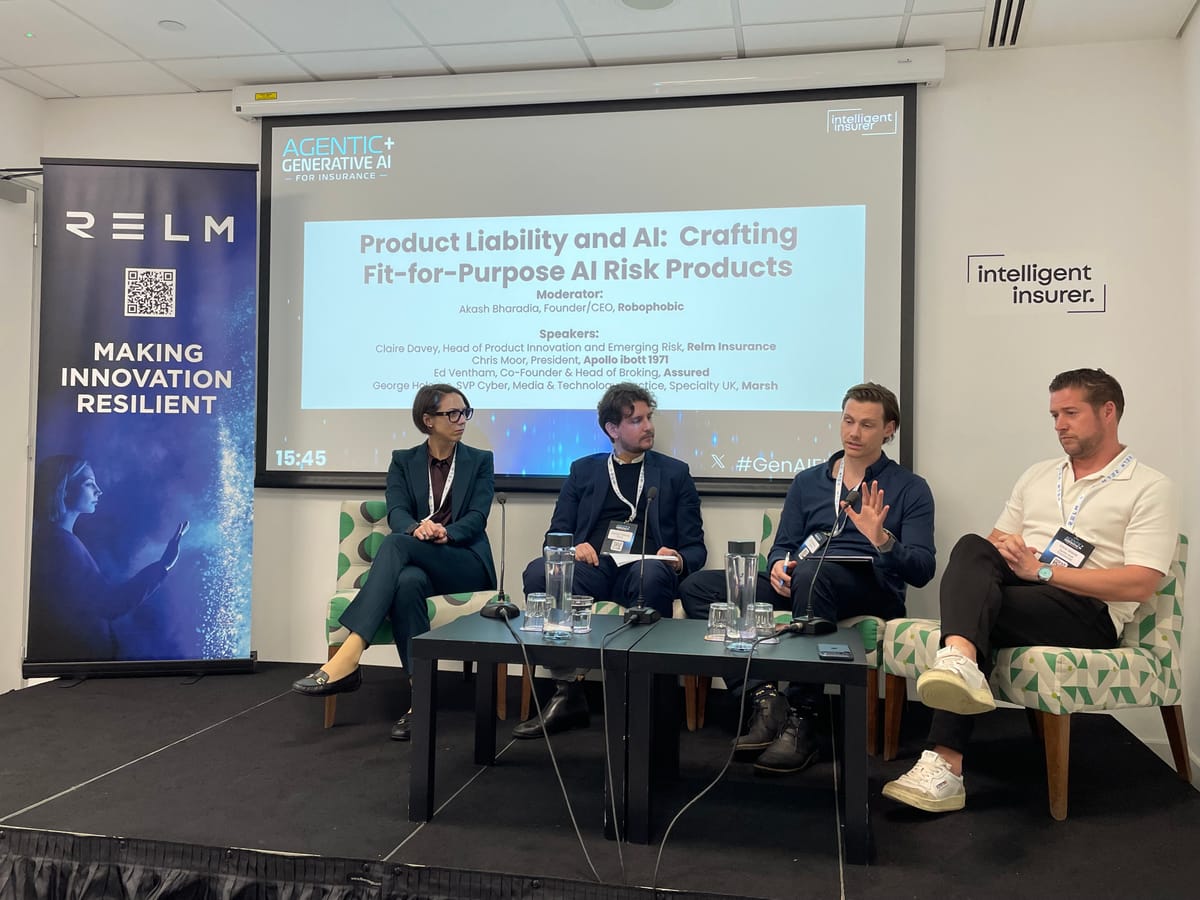
From the EU AI Act to cyber policy wording, panelists examined how emerging regulation and insurance structures intersect with enterprise AI deployment.
![Emotional Perception AI Limited v. Comptroller General [2026]](https://images.unsplash.com/photo-1593115057322-e94b77572f20?crop=entropy&cs=tinysrgb&fit=max&fm=jpg&ixid=M3wxMTc3M3wwfDF8c2VhcmNofDJ8fGdhdmVsfGVufDB8fHx8MTc3MDgzNDQzN3ww&ixlib=rb-4.1.0&q=80&w=1200)
Supreme Court allows appeal in Emotional Perception AI v. Comptroller General, mandating EPO-aligned test for computer-implemented inventions under UK law.

As GenAI scales across enterprises, quantum advances are compressing security timelines, challenging encryption lifetimes, governance models, and breach assumptions.

Under a $151 Billion SHIELD contract, IBM will bring governed, interoperable, mission-grade AI to accelerate threat detection and response.

In parallel to its existing inquiry, the European Commission has launched a new investigation into how risks are assessed and mitigated in connection with the deployment of Grok’s functionalities in X.

IBM’s Cost of a Data Breach Report 2025 reveals faster detection offsets rising AI-driven attacks, though US breach costs hit a record high.

Experts discuss the practical steps organizations must take to secure AI, protect data, and operationalize responsible deployments.

Workday faces lawsuit over AI hiring bias. EEOC supports case, raising questions about algorithmic discrimination and employer liability.

South Africa lacks dedicated AI strategy but addresses it in 4IR plans. The country leads regional efforts, emphasising ethics and human-centric approach.

The release of OpenEQA highlights the importance of developing AI agents that can understand and communicate about the world they perceive.

According to X.AI, Grok-1.5V outperforms its peers on a variety of tasks, including the newly introduced RealWorldQA benchmark.

The proposed US law represents one of the first major legislative efforts to grapple with the thorny copyright issues raised by generative AI as the capabilities of these systems rapidly advance.

Germany balances AI innovation with ethics, advocating for responsible development through national strategies, ethical guidelines, and international cooperation efforts.