Chinese AI start-up Moonshot has unveiled Kimi K3, a 2.8-trillion-parameter model it says can rival top American systems, at the World Artificial Intelligence Conference in Shanghai last week.

Moonshot describes K3 as its most capable flagship model yet, built for long-horizon coding, agentic knowledge work and reasoning, with native vision and a one-million-token context window. The company says it will be the world's first open model in the three-trillion-parameter class when full weights are released on 27 July, freely downloadable and customisable by outside developers.

Moonshot's own benchmarks place K3 behind proprietary rivals Claude Fable 5 and GPT-5.6 Sol overall, though it says the model performs at a frontier level across its evaluation suite. The BBC reports that third-party evaluations from Artificial Analysis and Arena.ai show K3 performing on a par with leading US models, and ranking first in web interface engineering ahead of Anthropic's Fable 5 in blind human-preference tests.

Backed by Alibaba and Tencent, Moonshot said K3 is designed to operate with minimal human supervision on complex engineering tasks.

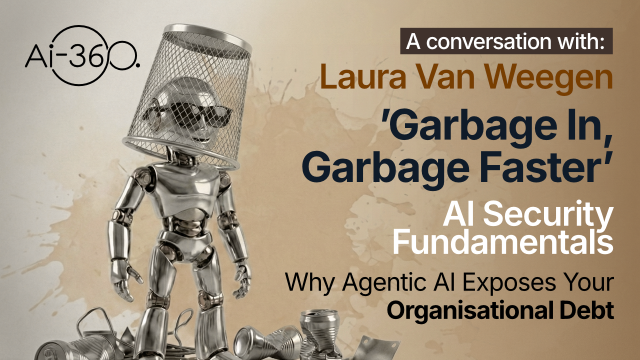
Garbage In, Garbage Faster: Why Agentic AI Exposes Your Organisational Debt
If Agentic AI follows your documented processes, what happens when those processes don’t reflect reality? Most organisations assume AI will figure things out. Business Architect Laura Van Weegen argues the opposite: AI doesn’t create new problems — it removes your ability to ignore the ones that have existed forever and a day. Undocumented workflows, undefined decision ownership, and human workarounds masking broken systems all get amplified at machine speed. You’ll learn: • Why “garbage in, garbage faster” is the real Agentic AI risk • The critical difference between feeding AI data versus information • How process debt compounds the same way technical debt does • Why exception handling is the new decision design priority • What one conversation reveals more than most AI readiness assessments • How to build explainability in from day one Key topics: Agentic AI readiness • Information architecture • Process debt • Data vs information • Contextual blindness • Decision ownership • Explainability vs traceability • Semantic infrastructure • Exception handling • Organisational accountability • Workflow documentation • AI governance Essential viewing for CISOs, CIOs, CFOs, and Chief Legal Officers evaluating Agentic AI deployment — before the human safety net disappears.

Share this post
The link has been copied!