Anthropic is collapsing the boundary between asking an AI a question and handing it a piece of work. On 16 September, the company announced that Claude Cowork and chat are merging into one Claude, while Claude Docs and Claude Slides join Claude Design as built-in creation tools.

The practical change is that users no longer have to decide whether a task belongs in chat or a separate Cowork environment. Anthropic says Claude can handle quick questions or longer work, create documents and presentations, use connected context and continue work after the user has closed a laptop. The rollout begins with Pro and Max plans, with other plans to follow.

The strategic interpretation is AI360’s rather than Anthropic’s: the competitive unit in enterprise AI is expanding beyond model quality toward the workflow around the model - files, connectors, permissions, collaboration, background execution and final deliverables.

For enterprises, that increases both usefulness and governance exposure. The more work an assistant can complete end to end, the more access it may need to corporate data and systems - and the more important identity, delegated authority, logging and review become.

The chatbot era was largely about answers. The emerging workspace model is about action and artefacts. That is a materially larger enterprise surface.

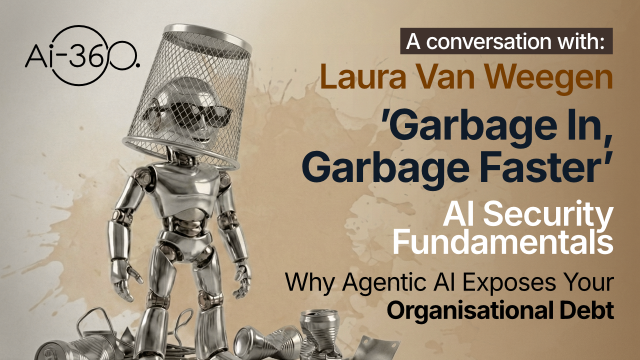
Garbage In, Garbage Faster: Why Agentic AI Exposes Your Organisational Debt
If Agentic AI follows your documented processes, what happens when those processes don’t reflect reality? Most organisations assume AI will figure things out. Business Architect Laura Van Weegen argues the opposite: AI doesn’t create new problems — it removes your ability to ignore the ones that have existed forever and a day. Undocumented workflows, undefined decision ownership, and human workarounds masking broken systems all get amplified at machine speed. You’ll learn: • Why “garbage in, garbage faster” is the real Agentic AI risk • The critical difference between feeding AI data versus information • How process debt compounds the same way technical debt does • Why exception handling is the new decision design priority • What one conversation reveals more than most AI readiness assessments • How to build explainability in from day one Key topics: Agentic AI readiness • Information architecture • Process debt • Data vs information • Contextual blindness • Decision ownership • Explainability vs traceability • Semantic infrastructure • Exception handling • Organisational accountability • Workflow documentation • AI governance Essential viewing for CISOs, CIOs, CFOs, and Chief Legal Officers evaluating Agentic AI deployment — before the human safety net disappears.
Share this post
The link has been copied!