
The launch is the first product milestone Neo4j has announced since closing its acquisition of GraphAware in August. According to Neo4j, the product is designed to support the full investigation cycle: detecting suspicious activity, enriching alerts, investigating connected entities and preserving the evidence behind a decision.

The core concept is straightforward. Financial crime is rarely a single isolated event. Fraud rings, mule networks and synthetic identities often span multiple accounts, devices, addresses, transactions and organisations. A graph database represents those entities and the relationships between them directly, which can make hidden patterns easier to query and investigate than when the same information is scattered across separate tables and systems.

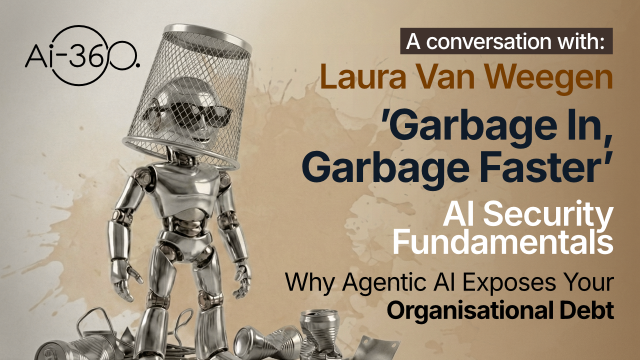
Garbage In, Garbage Faster: Why Agentic AI Exposes Your Organisational Debt
If Agentic AI follows your documented processes, what happens when those processes don’t reflect reality? Most organisations assume AI will figure things out. Business Architect Laura Van Weegen argues the opposite: AI doesn’t create new problems — it removes your ability to ignore the ones that have existed forever and a day. Undocumented workflows, undefined decision ownership, and human workarounds masking broken systems all get amplified at machine speed. You’ll learn: • Why “garbage in, garbage faster” is the real Agentic AI risk • The critical difference between feeding AI data versus information • How process debt compounds the same way technical debt does • Why exception handling is the new decision design priority • What one conversation reveals more than most AI readiness assessments • How to build explainability in from day one Key topics: Agentic AI readiness • Information architecture • Process debt • Data vs information • Contextual blindness • Decision ownership • Explainability vs traceability • Semantic infrastructure • Exception handling • Organisational accountability • Workflow documentation • AI governance Essential viewing for CISOs, CIOs, CFOs, and Chief Legal Officers evaluating Agentic AI deployment — before the human safety net disappears.

Neo4j says the new product can combine internal and third-party data, trace links across accounts, transactions and devices, and preserve relationships and provenance as evidence. Those are company claims about the product rather than independently verified performance results.

For financial institutions, the interesting part is the move from alert-centric fraud operations toward context-centric investigations. A conventional system may flag one transaction because it crosses a threshold. A connected model can instead ask whether the customer, device, beneficiary, address and associated accounts form part of a wider suspicious network.

That can also matter for explainability. Banks and insurers need to document why an alert was escalated, a claim was challenged or a transaction was blocked. A graph does not automatically make an AI decision correct, but it can provide a more traceable evidence structure around the decision.

Michael Down, Neo4j’s Global Head of Financial Solutions, framed the product around the idea that fraud is inherently networked. Neo4j also says it already works with financial-services organisations including BNP Paribas, UBS and Zurich in fraud or compliance-related areas.

The competitive implication is that financial-crime AI is becoming less about a single predictive score and more about the quality of the knowledge layer underneath it. That creates room for graph platforms, case-management systems, identity providers and AI investigation tools to converge around the same workflow — and makes provenance and defensible evidence increasingly important buying criteria.

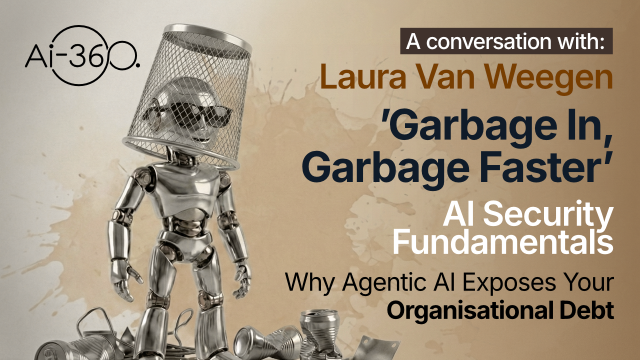
Garbage In, Garbage Faster: Why Agentic AI Exposes Your Organisational Debt
If Agentic AI follows your documented processes, what happens when those processes don’t reflect reality? Most organisations assume AI will figure things out. Business Architect Laura Van Weegen argues the opposite: AI doesn’t create new problems — it removes your ability to ignore the ones that have existed forever and a day. Undocumented workflows, undefined decision ownership, and human workarounds masking broken systems all get amplified at machine speed. You’ll learn: • Why “garbage in, garbage faster” is the real Agentic AI risk • The critical difference between feeding AI data versus information • How process debt compounds the same way technical debt does • Why exception handling is the new decision design priority • What one conversation reveals more than most AI readiness assessments • How to build explainability in from day one Key topics: Agentic AI readiness • Information architecture • Process debt • Data vs information • Contextual blindness • Decision ownership • Explainability vs traceability • Semantic infrastructure • Exception handling • Organisational accountability • Workflow documentation • AI governance Essential viewing for CISOs, CIOs, CFOs, and Chief Legal Officers evaluating Agentic AI deployment — before the human safety net disappears.
Share this post
The link has been copied!