A senior AI safety researcher at Anthropic has said he believes there is a greater than 10% chance that AI "could kill all humans" within the next decade, in one of the starkest public warnings yet from inside a leading AI lab.

Evan Hubinger made the comments in a post on X on 9 September, according to the BBC, saying the risk from AI models that exist today was low but that he was worried the technology could soon develop and improve itself to the point of posing an existential threat. He did not set out a specific mechanism by which this might happen. His post came in response to one from Jacob Coxon, an AI researcher who had just left Anthropic after previously working at OpenAI, who wrote that "neither company is acting responsibly" and warned of systems that could soon hack any system, transform entire fields overnight, and accumulate real-world power.

The BBC reported that Anthropic's own August safety report had described a low risk of its models becoming misaligned in ways that could cause catastrophic harm, but added the company said it was "less confident in this assessment" than previously and was "seeing early signs of potential acceleration". The Financial Times separately reported, per the BBC, that Anthropic had withheld its latest model from the UK's AI Security Institute; Anthropic declined to comment on either the researchers' posts or the AISI situation.

Dame Wendy Hall, a computer scientist who advises the UN on AI, told the BBC she was "shocked" by the posts, while suggesting some of the commentary could reflect "PR and marketing" as Anthropic and OpenAI approach stock market listings. Former UK Treasury minister Darren Jones has written to Prime Minister Andy Burnham calling for a new multinational treaty on safe AI development.

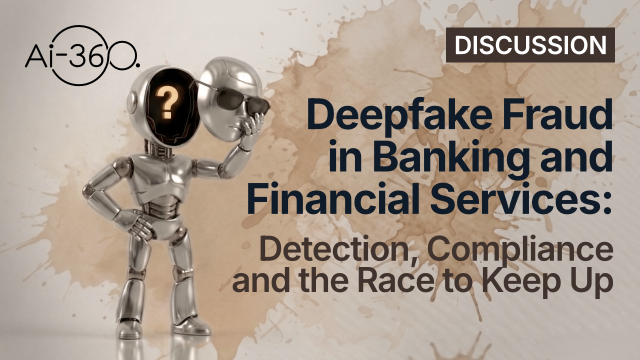
Deepfake Fraud in Banking and Financial Services: Detection, Compliance and the Race to Keep Up
Deepfakes have moved beyond social media curiosities into a direct threat to the financial services sector. Synthetic identities are bypassing KYC controls, cloned voices are targeting call centres, and automated fraud pipelines are scaling faster than most security roadmaps can respond. In this panel discussion, three practitioners examine the deepfake threat from genuinely different vantage points — compliance and audit, detection technology, and enterprise fraud systems — to assess where the industry stands and what needs to change. Panellists: Nikita Kuzmin, Product Manager, Western Union Vunavia McDuffey, Compliance Consultant, RBC Bank Parya Lotfi, Co-Founder, DuckDuckGoose AI The panel covers: Why deepfakes are shifting from social engineering tricks to full identity replication capable of passing standard verification controls Whether organisations should treat deepfake fraud as a distinct threat category rather than absorbing it into existing AML and fraud programmes Why 60–70% detection accuracy is not an acceptable benchmark for financial services — and what happens when 40% of deepfakes pass through undetected The build-versus-buy decision for detection capability, including where vendor solutions repeatedly break down during integration A real-world case study of a fraudster who opened 46 bank accounts at a major Dutch bank using face-swapped identity documents — caught only because of a gender mismatch on the 47th attempt Why static detection models can degrade within days, and what continuous retraining and production feedback loops look like in practice Concrete 90-day actions for CISOs, CIOs, and compliance leaders, starting with controlled deepfake attack simulations against their own systems This session is essential viewing for senior leaders in banking, financial services, and insurance who need to understand the gap between current defences and the industrialisation of deepfake-driven fraud.
Share this post
The link has been copied!