Anthropic has confirmed that future Claude models will generate text carrying a watermark, a measure taken to comply with the EU AI Act.

The company says the watermarking method, based on Google DeepMind's SynthID-Text approach, has no impact on the quality, cost or speed of Claude's output and adds no hidden characters or extra tokens to the text. Instead, it works by altering how the model settles low-stakes word choices, such as between "overcast" and "grey", using a cryptographic key rather than arbitrary randomness. Anyone holding that key can then assess the probability that a piece of text was generated by Claude, though the watermark carries no information identifying a specific user, organisation or conversation.

Anthropic notes the approach has limitations. It cannot confirm whether text is human-written, cannot detect other AI systems' output, and is harder to detect in short passages or heavily factual and code-based content, where there are fewer equally valid word choices to draw on. Light human editing is unlikely to remove a watermark entirely, though a full rewrite would.

The change follows Anthropic's signing of the EU Code of Practice on Transparency of AI-Generated Content in July 2026, alongside roughly 190 other signatories including other major AI developers, who will implement their own watermarking systems. Watermarking is being applied globally rather than restricted to the EU, as Anthropic says it currently lacks a reliable way to scope the requirement by region. Older Claude models, launched before August 2, 2026, will receive watermarking over the coming months under a transition period built into the law.

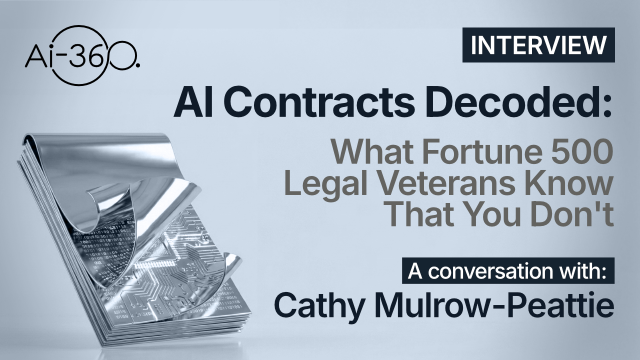
AI Contracts Decoded: What Fortune 500 Legal Veterans Know That You Don’t
When Microsoft refuses to negotiate indemnification with their biggest customers, what does that mean for your AI vendor contracts? When IBM data shows 97% of AI breaches stem from compliance failures—most being supply chain-related—who holds liability? When employees download shadow AI tools with zero cybersecurity controls, what recourse does your company have? None. Cathy Mulrow-Peattie brings perspective most outside counsel lack: Fortune 500 in-house experience at MasterCard and Omnicom, General Counsel at an AI startup, now advising enterprises. She starts with business goals before technology, technology before contracts—because she’s been in the hot seat when governance fails. You’ll learn: • Why 10-year AI contracts create risk and 90-day pilots with exit strategies are essential • The IP paradox: machine-generated outputs aren’t copyrightable but terms of use matter • How LLM providers retain “certain uses” of your data and when private instances become mandatory • Why contractual risk allocation to key vendors is your only viable strategy Key topics: Supply chain due diligence • The 97% compliance failure rate • Shadow AI liability traps • Benchmarking gaps • Hallucination disclaimers • GDPR/CCPA requirements • NY DFS Part 500 • Acceptable use policies • Dark web data sourcing • Evolutionary AI governance For: CISOs, CIOs, Chief Legal Officers, and compliance leaders navigating AI vendor relationships Contractual realities from someone who’s negotiated with Microsoft, advised Fortune 500s, and managed governance failures.
Share this post
The link has been copied!